

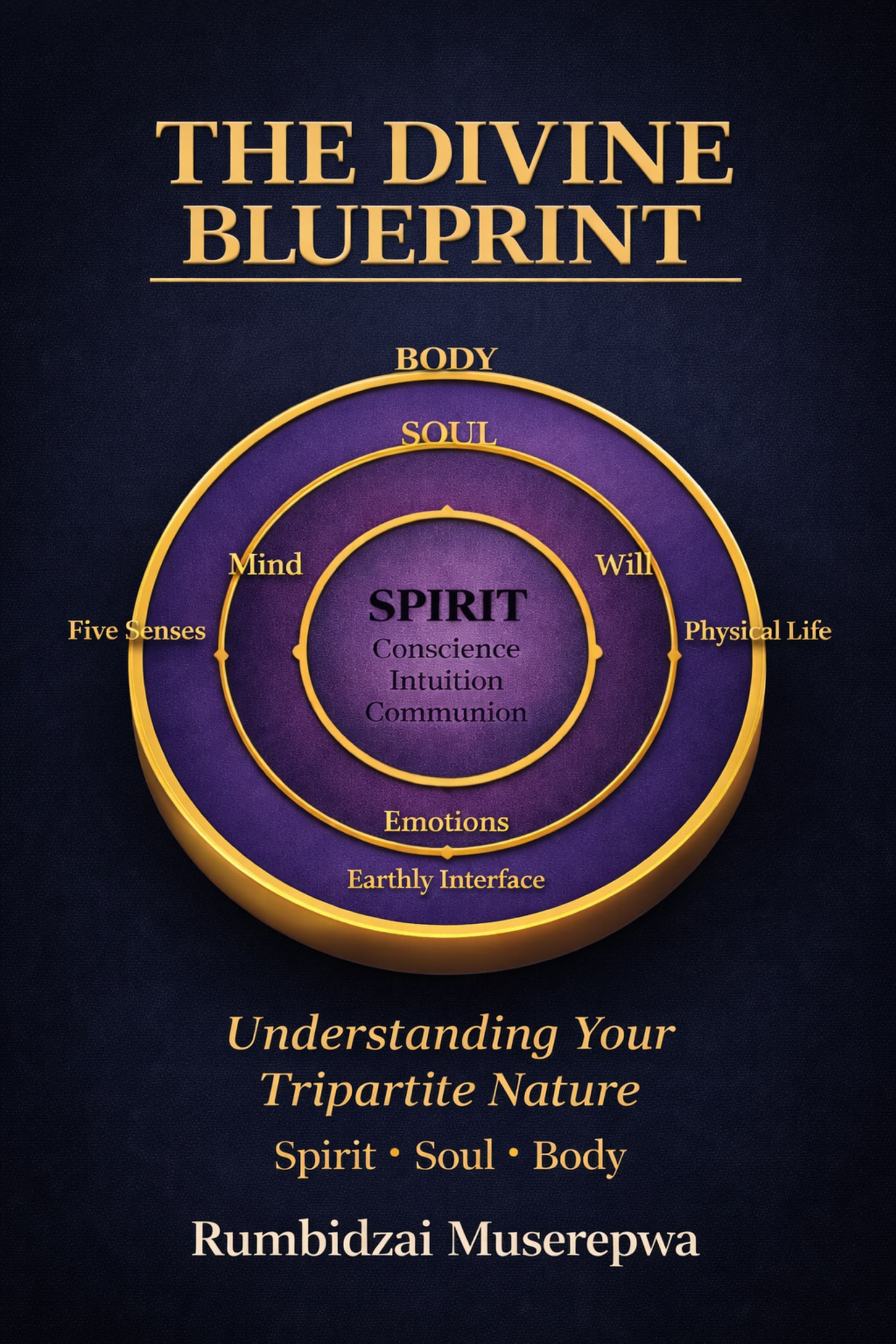
We've talked about how you're a spirit, not just a body with a spirit tucked inside, and how you carry the image of God. But there's a question worth sitting with a bit longer: what does your spirit actually do? What's its role in your everyday life?
Scripture gives us a clear answer, and it starts with a question Paul asks in 1 Corinthians:
1 Corinthians 2:11 (KJV)
"For what man knoweth the things of a man, save the spirit of man which is in him? even so the things of God knoweth no man, but the Spirit of God."
Think about that for a second. Nobody truly knows you, not fully, except your own spirit. Your closest friend, your spouse, even you on your most self-aware day, only ever sees the surface. Your spirit is the part of you that actually knows you. It's the seat of your self-awareness, the place where your real thoughts, motives, and experiences live before they ever surface.
That's already a lot to take in, but there's more; Proverbs gives us a picture of what your spirit is actually for.
Proverbs 20:27 (KJV)
"The spirit of man is the candle of the LORD, searching all the inward parts of the belly."
The Hebrew word translated "candle" here is ner, a small oil lamp used to light a dark room. That's the picture: your spirit isn't just a passive part of you sitting quietly in the background; it's a lamp. And it's God's lamp specifically, lit by Him, for the purpose of searching you.
When you're walking in fellowship with God, that light does something. It searches the depths of your own heart. It brings clarity to things you've been avoiding. It reveals truth you might not have wanted to see. It exposes what actually needs to change, not to shame you, but so you can actually deal with it.
This is also why real worship has to involve your spirit, not just your actions. Jesus said it plainly to the woman at the well:
John 4:24 (KJV)
"God is a Spirit: and they that worship him must worship him in spirit and in truth."
Notice the word "must", not "should," not "it helps if," but " must. True worship isn't optional, and it isn't something your body or your mind can pull off on its own. Your body can go through every motion, stand at the right time, sing the right words. Your mind can follow along, understand the theology, agree with every line. But none of that is worship until your spirit is actually engaged.
That's why it's completely possible to sit through an entire service and walk out having never actually worshipped. And it's just as possible to worship God in complete silence, alone, with nothing outward happening at all, because worship was never primarily about the outward part to begin with. It's a spiritual act: spirit connecting with Spirit.
So here's the question worth carrying with you: is your spirit actually engaged when you pray, when you sing, when you sit in church? Or has some of it become motion without connection?
Your spirit is the lamp of the Lord. It's not decoration. It has a job to do, in your worship and in your self-understanding. The question is whether you're letting it do that job, or just going through the motions and calling it enough.
Share this teaching
Stay Updated with New Teachings
Subscribe to receive notifications when new teachings are published
Related Teachings

You Carry His Image: What It Actually Means to Be Made Like God
Genesis doesn't stop at explaining how you were formed from dust and given breath (Genesis 2:7). It goes on to tell you why that matters. "So God created man in His own image, in the image of God He created him" (Genesis 1:27). The Hebrew word for image, tselem, means likeness, resemblance, representation. And it gets repeated three times in two verses. God wanted this point made unmistakably clear. You carry His image. No other creature was given that.

You are not a Body with a Spirit. You are a Spirit with a Body.
Have you ever noticed how often we describe ourselves in terms of what's happening to our bodies or our emotions? "I'm exhausted." "I'm so angry right now." "I'm just not feeling like myself today." We say these things as if they're the whole truth about who we are. But what if they're not? What if the tiredness, the anger, the "not feeling like myself" are all things happening to you, not things that define you? Scripture offers us a much deeper answer to the question "who am I?" It starts all the way back in Genesis, with a verse most of us have read a hundred times without ever pausing to consider what it's actually saying.